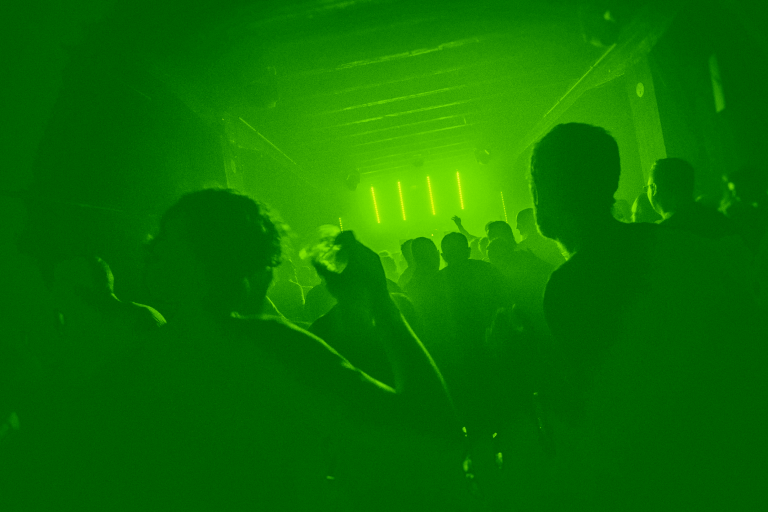
Madison isn’t a city that shouts – it hums.
Between two lakes, framed by bike paths and brick basements, the Wisconsin capital has built a sound as fluid as the water that surrounds it. Here, music isn’t just nightlife. It’s protest, it’s poetry, it’s a way of belonging in a place that always seems to be in motion.
From student co-ops and punk basements to open-air stages on the isthmus, Madison’s music culture was never about glamour. It was about expression – a conversation between idealism and rebellion that still echoes through the city today.
The Soundtrack of a State of Mind
In Madison, the beat has always been political.
From the protest songs of the 1960s campus movements to the indie-folk and electronic fusions that fill the air today, music has been how the city argues, dreams, and heals.
Walk down State Street on a summer night and you’ll hear it – buskers looping guitar riffs, jazz trios tucked into cafes, DJs spinning vinyl at microbreweries. It’s not chaos. It’s community in stereo.
“In Madison, everyone’s a little bit of an artist. The city invites you to make noise – and to make meaning with it.”
Madison’s sound isn’t defined by genre. It’s defined by intent.
A blend of folk intellect, punk grit, and electronic curiosity – a sonic reflection of a city that lives between activism and academia.
Basements, Co-ops & the DIY Revolution
While the Capitol dome towers above, Madison’s true culture lives underground.
Student co-ops on Mifflin and Langdon, living rooms in the Greenbush neighborhood, warehouse spaces on the East Side – these are the places where sound is born.
In the ’90s and early 2000s, punk and indie scenes flourished. Bands like The Promise Ring, Cap’n Jazz, and Rainer Maria helped define Midwest emo’s emotional honesty, turning the city into a hub for raw creativity.
Meanwhile, techno and electronic collectives – often student-led, always experimental – started filling the gaps between guitars with beats. DIY festivals and co-op shows blurred boundaries between genres, turning concerts into cultural collisions.
“If you couldn’t find a stage in Madison, you built one.
And if you couldn’t build one, someone would lend you theirs.”
That do-it-yourself spirit became Madison’s trademark.
Here, sound wasn’t a product. It was a process.
The University Effect: Knowledge, Noise & New Sounds
Madison’s youth has always been its amplifier. With the University of Wisconsin at its core, the city regenerates every four years – new students, new bands, new energy.
The result is perpetual reinvention. From protest folk to psych-rock, from underground hip-hop to modular synth collectives, Madison’s music scene constantly refreshes itself without losing its soul.
University radio stations like WSUM and community venues like The Frequency, Majestic Theatre, and The Sylvee became platforms where the academic met the anarchic – proof that ideas and rhythm often share the same wavelength.
“Madison is a city where theory meets feedback.
It’s where someone quotes Foucault before sound-checking their guitar.”
Lakes, Light, and the Pulse of Place
Few cities blend nature and nightlife like Madison. After all, this is a city that literally floats between lakes.
That geography shapes its music – fluid, reflective, alive at sunset.
You’ll find impromptu concerts at Memorial Union Terrace, electronic sets under bridges, and jazz drifting from sailboats at dusk. Summer music festivals like AtwoodFest, La Fête de Marquette, and Make Music Madison spill out onto streets where everyone – families, students, strangers – becomes part of the show.
There’s something uniquely Madison about it: the sense that music is not an escape from the city, but an extension of its landscape.
From Counterculture to Community
In many ways, Madison’s story mirrors its history of protest.
The same spirit that filled the Capitol Square with activists also fills its stages with musicians who see performance as participation.
Music in Madison often carries a purpose – whether it’s climate justice, racial equity, or mental health awareness.
Artists here don’t just entertain. They educate, inspire, and mobilize.
“Every song is an act of resistance.
Every crowd is a movement.”
That blending of art and activism gives Madison’s scene an authenticity few cities can claim. It’s not about chasing fame – it’s about creating change.
A Scene That Never Sits Still
Madison’s size is its superpower.
Small enough for intimacy, big enough for ambition, it allows artists to experiment without expectation.
New collectives like Communication Madison, Tone Madison, and Cafe Coda keep pushing boundaries – curating experiences that fuse music with visual art, poetry, and technology.
From punk basements to jazz lounges, the city’s sonic ecosystem is constantly evolving, fed by collaboration instead of competition.
“Madison’s sound is the space between genres –
a dialogue, not a declaration.”
Keeping the Lakes Alive
As rents rise and redevelopment reshapes downtown, Madison faces the same pressures as every creative city: gentrification, loss of grassroots spaces, and the push toward commercialization.
But the city’s culture remains resilient. Because Madison’s rhythm has never been owned – it’s shared.
Walk by the lake at night and you’ll still hear it – a drum circle near the Terrace, laughter echoing off the water, someone strumming under a streetlight. The sound that reminds you why Madison matters: because it keeps believing that music can change something – even if it’s just your next step home.
Madison’s beat is gentle but unbreakable –
a melody of protest, passion, and possibility.
It’s the sound of a city thinking, feeling, and dancing at the same time.