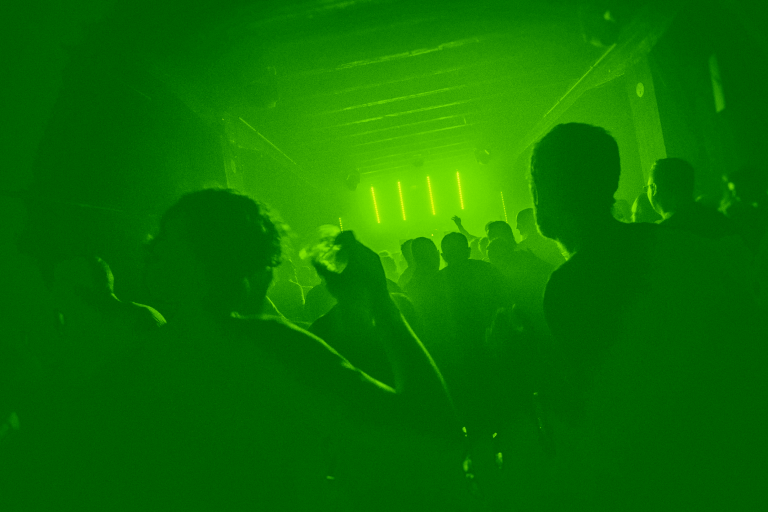
Chicago didn’t invent rhythm – it electrified it.
Born from the ashes of disco and the heartbeat of the South and West Sides, Chicago’s music culture didn’t just move people – it moved civilizations. In the early 1980s, behind unmarked doors and inside smoky warehouses, a generation of outsiders built something new: House Music, the soul of a city finding its future through sound.
What started as underground parties became a global movement. But for those who were there, it was never about fame. It was about freedom.
The Soundtrack of Rebirth
The moment the Wall came down everything changed overnight. Suddenly vast, unexplored spaces in East Berlin were open The late 1970s were a strange time in Chicago. Disco had been declared dead. Factories were closing. Racial tensions simmered beneath the surface of a city split by lines that everyone pretended not to see. But on the South Side, in basements and backrooms, a new energy was taking shape.
At clubs like The Warehouse, Power Plant, and Muzic Box, a young generation – creative, unapologetic – found a place to breathe. DJs like Frankie Knuckles, Ron Hardy, and Farley Jackmaster Funk stitched together disco, soul, gospel, and early synth beats into something new. Something spiritual. Something that made you feel seen.
“House was church.
But the preacher was behind the decks,
and the sermon was the bassline.”
When the rest of the city slept, Chicago’s underground danced – not to escape the world, but to rewrite it.
The Warehouse: Where It All Began
Every movement needs a temple. For Chicago, it was The Warehouse – a former factory turned sanctuary for rhythm.
House wasn’t a sound; it was an emotion. A coded language for those who didn’t fit anywhere else.
“When you walked in, it felt like you were being baptized in sound.”
The name “house music” came from the place itself – the music you heard at The Warehouse. But its message spread fast, outgrowing its walls and rewriting dance culture worldwide.
From Underground Movement to Global Legacy
By the late 1980s, Chicago’s sound had jumped continents. British DJs visiting the city carried vinyls back to London, Manchester, and Berlin, sparking new revolutions in dance music. But back home, house remained local – a grassroots, community-built art form.
Producers worked with whatever they had: drum machines, cassette decks, cheap synths. From those limitations came innovation. Tracks like “Your Love”, “Move Your Body”, and “Can You Feel It” became anthems not because of studio budgets, but because of spirit.
Meanwhile, new generations of Chicago artists – from Green Velvet to DJ Heather to Honey Dijon – kept the legacy alive, pushing boundaries while honoring the roots.
The City That Shapes Its Sound
Chicago’s geography is in its groove.
You can hear the lake wind in its synth swells, the steel mills in its percussion, the CTA in its tempo. The city’s grid system became its metronome – structured but infinite.
From loft raves in Pilsen to jazz nights in Bronzeville, Chicago’s music culture has always blurred boundaries. House met hip-hop, gospel met techno, and soul met industrial. The result was a living, breathing soundtrack to a city that refuses to be defined by a single note.
“Chicago doesn’t follow trends.
It builds blueprints.”
Community, Resistance & the Spirit of the Dancefloor
For the communities that built it, house music was never just a party – it was survival.
It gave voice to the marginalized, safety to the unseen, and rhythm to resilience.
On a Chicago dancefloor, everyone was equal.
You could be a steelworker, a drag queen, a bus driver, a poet – once the bass dropped, you were part of the same current.
Those nights stitched together a cultural fabric that still holds the city today – where community is built through rhythm, not rhetoric.
From Illegal to Institution
As the years went on, Chicago’s underground gave birth to global icons. Festivals like Chosen Few Picnic, ARC Music Festival, and Spring Awakening celebrate a legacy that began in dimly lit warehouses.
What was once underground became industry.
But unlike many cities, Chicago never lost its grassroots heartbeat. You can still find pop-up parties under train tracks, loft gatherings in the South Loop, and sunrise DJ sets by the lake – echoes of the same energy that started it all.
“The city keeps changing, but the beat never does.”
Keeping the Faith
Chicago has always been a city of contradictions – hard and soulful, divided and united, restless and resilient.
Its music reflects that truth. It’s not escapism; it’s expression. Not fantasy, but faith.
Walking through the city on a humid summer night, you can still feel it – that pulse rising from a rooftop, that bass echoing down an alley. The sound that reminds you this city isn’t built on skyline or steel – it’s built on soul.
For those who lived it and those who still do, house music remains what it always was:
A rebellion you can dance to.
A heartbeat that refuses to fade.
A reminder that, in Chicago, the beat will always find a way home.
Chicago’s sound didn’t just change music. It changed how people connected.
And if you listen closely, the city is still dancing.